South Africa is currently navigating a precarious political landscape after sharp disagreements among coalition partners regarding the recently tabled national budget. Analysts describe this situation as "uncharted waters," primarily due to the backlash against Finance Minister Enoch Godongwana's proposals, which were initially met with resistance from key political allies.
The African National Congress (ANC), having formed a government of national unity (GNU) with nine other parties following a loss in parliamentary majority last year, is now at a crossroads. Absent the support of its major coalition partner, the Democratic Alliance (DA), the ANC may struggle to pass the budget unless it revisits its contentious policies or gains the backing of significant opposition parties.
Godongwana's budget presentation had to be postponed last month after outcry over a proposed increase in value-added tax (VAT) that would exacerbate the financial burden on South Africans already dealing with a cost-of-living crisis. Such a delay has not occurred since the end of apartheid in 1994.
After consultations with coalition partners, the Finance Minister returned with a "bold and pragmatic" revised budget that seeks to reduce the VAT increase from 15% to 16%, implemented over two years. Godongwana argues that tax increases are essential to address persistent pressures in sectors such as health, education, and security.
Critics, however, argue that increasing VAT will significantly strain households. The budget, while supported by the ANC, continues to face resistance from the DA, which has made it clear that it will not endorse any tax hikes without corresponding reforms to boost the economy and promote job creation.
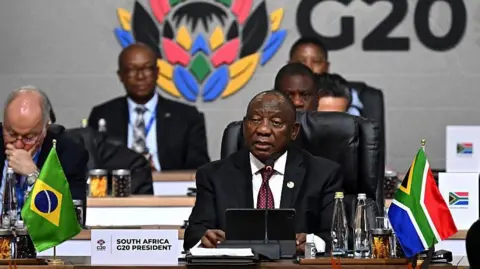
This budgetary deadlock has damaged President Cyril Ramaphosa's reputation as a negotiator, with only the small Patriotic Alliance currently backing the budget. The ongoing conflict illustrates the fragile nature of the coalition, as the two principal parties have been embroiled in disputes over various issues since its inception.
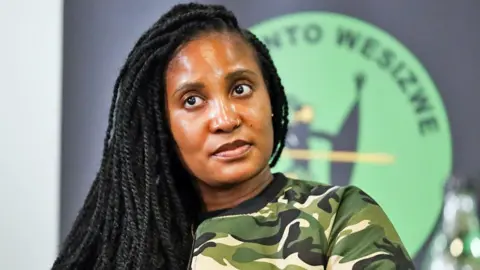
Among other opposing parties, the Economic Freedom Fighters (EFF) and Umkhonto weSizwe (MK) have denounced the budget, claiming that the proposed tax increases would disproportionately affect the impoverished. This scenario places the ANC in a precarious position, requiring support from other significant political entities to ensure the budget's passage.
Experts are cautioning that the parliament's role will be crucial as it determines whether the budget is accepted, amended, or rejected, given that the ANC can no longer impose its policies unilaterally. Thokozile Madonko from Wits University emphasized that failing to secure a deal could lead to a budget rejection, threatening the coalition's survival.
Critics of Godongwana's approach observed that opting to raise VAT over implementing a wealth tax against the affluent represents a missed opportunity for fair financing, as many believe it unfairly impacts the entire population. Others lamented the government's previous promises related to economic growth and job creation, which remain unfulfilled as unemployment remains over 30%.
As Godongwana works to salvage his standing amidst the fallout from his budget presentation, the coming weeks will be decisive for both his credibility and the coalition government’s future stability.