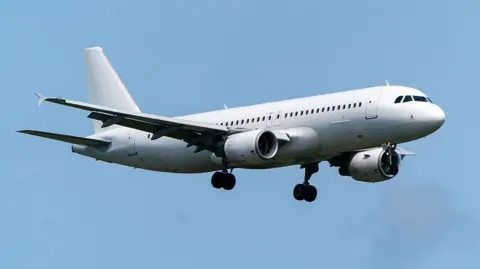
New strategies are emerging to address the climate concerns linked with jet contrails, the vapor trails produced during flight. Researchers highlight that a straightforward adjustment in aviation practices could mitigate the warming effects of these vapors for as little as £4 per flight. While conspiracy theories surrounding contrails, including claims about mind control and disease, abound, experts agree that the primary issue lies in their contribution to global warming.
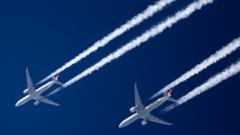
Contrails, known for their cloudy trails in the sky, are formed when airplane engines release water vapor that condenses in cold, humid air. Recent studies focus on the significant climate impact of contrails, which doubles the heating effect associated with aviation's fossil fuel usage. At the forthcoming UN climate conference, COP29, set to take place in Baku, the above issues will be addressed for the first time on this global platform.
Carlos Lopez de la Osa from Transport & Environment points out that contrails create an artificial cloud layer that traps heat escaping from the Earth, echoing concerns about their warming effect being on par with carbon emissions from aviation. Despite the unfounded claims surrounding “chemtrails,” experts stress the importance of combating misinformation to gain consensus on climate solutions.
The COP29 aims to motivate action by outlining that minor modifications to a few flight paths could drastically reduce contrail-related warming. Notably, around 80% of contrail warming comes from merely 3% of flights. The report identifies that longitude, latitude, and time of day impact contrail formation, with evening and night flights being particularly concerning.
Mr. Lopez de la Osa advocates for implementing additional considerations into flight planning to avoid contrail formation, stating it's one of the more achievable climate solutions. Researchers hope that discussions at COP29 will enhance awareness about temperature-increasing contrails, advocating for effective approaches to significantly lessen their climate footprint at a fraction of the expenses currently allocated to alternative sustainable aviation fuels.