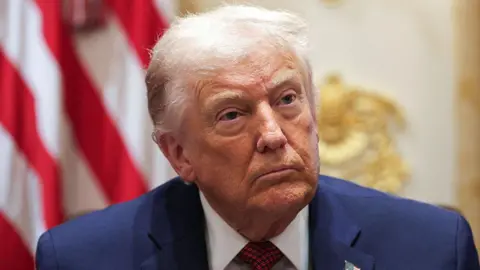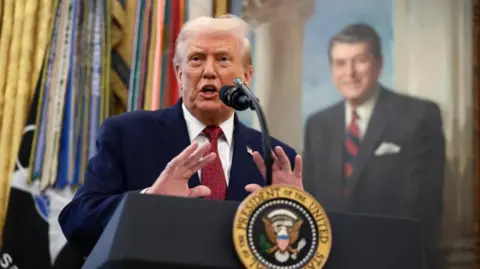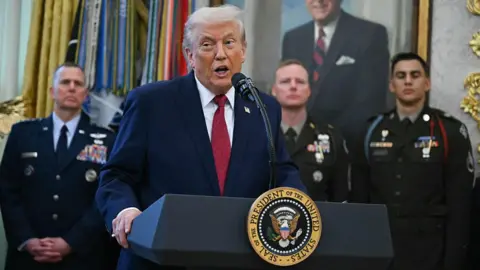
The World Trade Organization (WTO) has issued a stark prediction regarding global trade, projecting a downturn this year largely attributable to tariffs imposed by US President Donald Trump. The organization expressed concerns about "severe downside risks," including retaliatory tariffs and political instability, which could exacerbate the decline in global goods trade. The decline in trade is anticipated to be particularly acute in North America, with estimates suggesting a decrease of over 10% in that region.
WTO Director-General Ngozi Ikonjo-Iweala expressed alarm over the growing disconnect between the US and China, labeling it a "phenomenon that is really worrying." Initially, the WTO had forecasted that global goods trade would grow by 2.7% by 2025; however, it has now revised this forecast to a decrease of 0.2%.
Ralph Ossa, the WTO's chief economist, highlighted that "tariffs are a policy lever with wide-ranging and often unintended consequences." He noted that uncertainty surrounding trade policies significantly dampens trade flows, leading to reduced exports and weakened economic activity overall. The imposition of a baseline tariff of 10% on nearly all foreign imports to the US went into effect on April 5, sparing only select countries and goods. In contrast, China faces substantially higher tariffs of approximately 145% on most imports.
As a result of these developments, US stock markets opened lower on Wednesday, with major indices falling amidst ongoing uncertainties. Despite the forecast of reduced trade with the US, the WTO anticipates that regions like Asia and Europe may still witness moderate growth in their trade activities this year. The report also suggests that other regions will continue to contribute positively to global trade growth.
Notably, for the first time, the WTO's report includes projections for services trade, which pertains to the exchange of services rather than goods. Industries such as tourism and finance are common examples of services trade. The WTO predicts that services trade will grow by 4% by 2025, which represents a downward adjustment of around one percentage point from previous expectations.
Since taking office in January, President Trump has made numerous announcements concerning tariffs. He posits that these import taxes will stimulate domestic purchasing of American-made products, increase tax revenue, and spur significant investment within the country. Critics, however, argue that revitalizing manufacturing in the US is a complex process that may take decades, jeopardizing the economy in the interim. Trump's administration has also made various adjustments to its tariff stance, including a recent 90-day pause on tariffs against most trading partners, except China, triggered by growing dissent from lawmakers and financial markets.
Among warnings concerning the economic impact of Trump's tariffs, the governor of the Bank of England cautioned that these measures could translate to diminished disposable income for consumers in the UK.
WTO Director-General Ngozi Ikonjo-Iweala expressed alarm over the growing disconnect between the US and China, labeling it a "phenomenon that is really worrying." Initially, the WTO had forecasted that global goods trade would grow by 2.7% by 2025; however, it has now revised this forecast to a decrease of 0.2%.
Ralph Ossa, the WTO's chief economist, highlighted that "tariffs are a policy lever with wide-ranging and often unintended consequences." He noted that uncertainty surrounding trade policies significantly dampens trade flows, leading to reduced exports and weakened economic activity overall. The imposition of a baseline tariff of 10% on nearly all foreign imports to the US went into effect on April 5, sparing only select countries and goods. In contrast, China faces substantially higher tariffs of approximately 145% on most imports.
As a result of these developments, US stock markets opened lower on Wednesday, with major indices falling amidst ongoing uncertainties. Despite the forecast of reduced trade with the US, the WTO anticipates that regions like Asia and Europe may still witness moderate growth in their trade activities this year. The report also suggests that other regions will continue to contribute positively to global trade growth.
Notably, for the first time, the WTO's report includes projections for services trade, which pertains to the exchange of services rather than goods. Industries such as tourism and finance are common examples of services trade. The WTO predicts that services trade will grow by 4% by 2025, which represents a downward adjustment of around one percentage point from previous expectations.
Since taking office in January, President Trump has made numerous announcements concerning tariffs. He posits that these import taxes will stimulate domestic purchasing of American-made products, increase tax revenue, and spur significant investment within the country. Critics, however, argue that revitalizing manufacturing in the US is a complex process that may take decades, jeopardizing the economy in the interim. Trump's administration has also made various adjustments to its tariff stance, including a recent 90-day pause on tariffs against most trading partners, except China, triggered by growing dissent from lawmakers and financial markets.
Among warnings concerning the economic impact of Trump's tariffs, the governor of the Bank of England cautioned that these measures could translate to diminished disposable income for consumers in the UK.