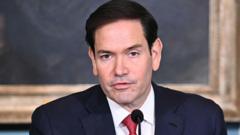
The sanctions were publicly disclosed following a UN conference that aimed to bolster support for a two-state solution. The meeting drew ire from the Trump administration, which deemed the discussions as "anti-Israel", showcasing its alignment with Israeli interests. The US State Department claims the PA and PLO are escalating the conflict by seeking international support through legal avenues like the International Criminal Court.
Palestinian leaders have condemned the sanctions as retaliatory measures resulting from the growing recognition of Palestinian statehood by various global actors. They argue that these steps only further illustrate the US's disproportionate response, with many labelling the actions as punitive against a population they consider victims rather than aggressors.
In response, Israel welcomed the US sanctions, stating they expose perceived moral inconsistencies in countries moving towards recognizing a Palestinian state without addressing terrorism concerns. Meanwhile, the PA has offered to reconsider its financial support for imprisoned Palestinians, prompting discussions around its payments which many claim are in violation of international law.
Critics of the sanctions argue that this policy reflects a misguided approach that penalizes the victims of conflict rather than the aggressors. With the current climate discouraging diplomatic engagement, the travel restrictions on PA and PLO officials signal a troubling trend for future US-Palestinian relations. It remains ambiguous how these visa restrictions will impact the operations of the Palestinian mission to the UN, particularly as some officials hold US citizenship.
As global conversations evolve around the Israeli-Palestinian conflict, the US's stance appears increasingly isolated, leaving diplomatic efforts for peace in a precarious position. The looming travel ban could further complicate the already challenging dynamics for Palestinian officials aiming to engage internationally.
Palestinian leaders have condemned the sanctions as retaliatory measures resulting from the growing recognition of Palestinian statehood by various global actors. They argue that these steps only further illustrate the US's disproportionate response, with many labelling the actions as punitive against a population they consider victims rather than aggressors.
In response, Israel welcomed the US sanctions, stating they expose perceived moral inconsistencies in countries moving towards recognizing a Palestinian state without addressing terrorism concerns. Meanwhile, the PA has offered to reconsider its financial support for imprisoned Palestinians, prompting discussions around its payments which many claim are in violation of international law.
Critics of the sanctions argue that this policy reflects a misguided approach that penalizes the victims of conflict rather than the aggressors. With the current climate discouraging diplomatic engagement, the travel restrictions on PA and PLO officials signal a troubling trend for future US-Palestinian relations. It remains ambiguous how these visa restrictions will impact the operations of the Palestinian mission to the UN, particularly as some officials hold US citizenship.
As global conversations evolve around the Israeli-Palestinian conflict, the US's stance appears increasingly isolated, leaving diplomatic efforts for peace in a precarious position. The looming travel ban could further complicate the already challenging dynamics for Palestinian officials aiming to engage internationally.