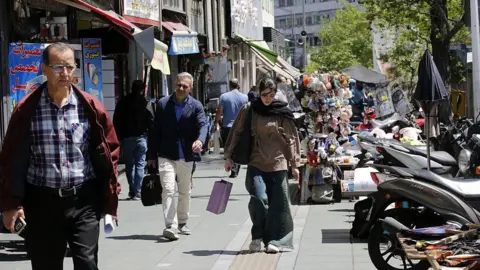
On a bright Tehran spring day, Sanaei Ghaznavi street, bustling with various shops, seems like an ordinary place. Yet, beneath this facade, the people endure a harsh reality shaped by crises that threaten their futures.
Mohammad, working in his family’s shoeshop, exudes a spirit of hope even as business has dwindled. Customers are scarce, and his father Mustafa reflects somberly on how his store has served their family for 40 years but now suffers from a dwindling clientele. Unofficial estimates suggest that as many as four million jobs have faltered due to the entwined effects of war and digital restrictions imposed by the government.
Economic hardships are palpable; some citizens, like Shahla, report exorbitant price increases for basic goods like bread, now costing three times more than before. Discussions about hope and despair blend in conversations as many dream of peace, yet expect the worst with the looming threat of conflict once again.
Meanwhile, the dynamic nature of Tehran continues, with visible contrasts: bustling cafes filled with patrons next to empty stores, showcasing a resilience among its citizens. An architect shares his deep desire for freedom and a better future, connecting his wishes with those of others around him.
Despite mounting frustrations over job losses and economic conditions, the streets display an undeniable spirit of life, where young people gather, affirming their human need for connection amidst uncertainty. Conversations with residents reflect a complex interplay of nostalgia for a better past and a wary hope for the future, as Tehran navigates a precarious balance between survival and the anticipation of potential war.
Mohammad, working in his family’s shoeshop, exudes a spirit of hope even as business has dwindled. Customers are scarce, and his father Mustafa reflects somberly on how his store has served their family for 40 years but now suffers from a dwindling clientele. Unofficial estimates suggest that as many as four million jobs have faltered due to the entwined effects of war and digital restrictions imposed by the government.
Economic hardships are palpable; some citizens, like Shahla, report exorbitant price increases for basic goods like bread, now costing three times more than before. Discussions about hope and despair blend in conversations as many dream of peace, yet expect the worst with the looming threat of conflict once again.
Meanwhile, the dynamic nature of Tehran continues, with visible contrasts: bustling cafes filled with patrons next to empty stores, showcasing a resilience among its citizens. An architect shares his deep desire for freedom and a better future, connecting his wishes with those of others around him.
Despite mounting frustrations over job losses and economic conditions, the streets display an undeniable spirit of life, where young people gather, affirming their human need for connection amidst uncertainty. Conversations with residents reflect a complex interplay of nostalgia for a better past and a wary hope for the future, as Tehran navigates a precarious balance between survival and the anticipation of potential war.